
Technical infos & composition
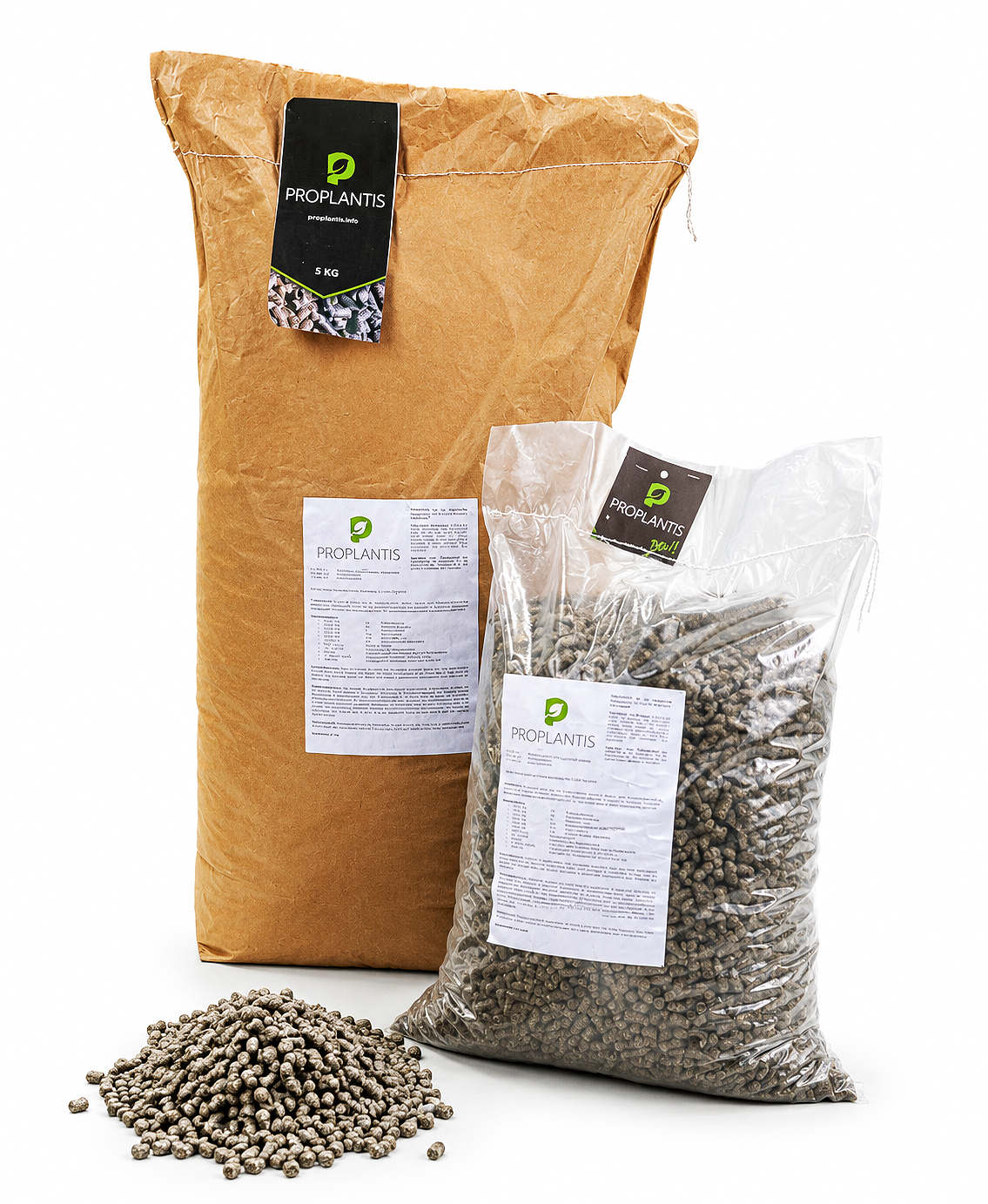
The core philosophy behind ProPlantis is simple: to replicate key functional properties of natural forest soil within engineered substrate systems — water retention, nutrient storage and biological substrate activity.
Beyond the physical and chemical parameters commonly prioritized in substrates, ProPlantis helps create moisture- and nutrient-stable conditions that can support biological activity in the root zone.Looking ahead, ProPlantis is exploring biomass from rewetted peatlands and paludiculture as a sustainable raw material pathway. This circular-economy approach is being investigated within the EU project MarginUp!, in collaboration with the Leibniz Institute for Agricultural Engineering and Bioeconomy (ATB) in Potsdam-Bornim.
ProPlantis is an organic NPK fertilizer and natural substrate additive designed to optimize key performance parameters of green roof substrates, tree planting media and professional landscaping soils.
Engineered for demanding vegetation systems, it helps substrates retain more water, store nutrients effectively and support plant vitality under heat, drought and climate stress.
In modern landscaping and green-blue infrastructure, ProPlantis serves as a technical tool for improving substrate performance and increasing the ecosystem services provided by green roof and urban vegetation systems.
High water-holding capacity
Highcation-exchange capacity (CEC) for effective nutrient storage
Organic NPK fertilizer and natural substrate additive
Engineered for green roofs, urban tree substrates and professional landscaping
The guiding idea behind ProPlantis is simple: to functionally mimic key properties of forest soil in a form that can be integrated into technical substrate systems. In the longer term, ProPlantis also sees biomass from rewetted peatlands and paludiculture as a potential raw material pathway, an approach explored in the EU project MarginUp.

Tested and documented by


EU research project partner


“Views and opinions expressed are however those of the author(s) only and do not necessarily reflect those of the European Union or REA. Neither the European Union nor REA can be held responsible for them.”
Technical documentation, laboratory testing and field trials demonstrate the role of ProPlantis in improving water retention, plant vitality and roof runoff dynamics, while supporting stable nutrient availability within the substrate system.
Runoff coefficient in comparison
Key technical parameters
water retention: up to 880 g H₂O / 100 g dry matter
organic matter: 78.2%
NPK: 2.2 – 0.5 – 1.2
Nitrogen: more than 99% organically bound
pH value: 6.3 dry product / 5.7 at water capacity
Cation exchange capacity (CEC*): 27 mmolc/100g
*For comparison, typical CEC values of porous growing media constituents (in cmolc/kg): rockwool (up to 0.5), perlite (2.0), expanded clay (2.5), crushed brick (4.0), and volcanic pumice (6.5).